
You are standing in the middle of a massive stone yard, surrounded by hundreds of towering slabs. The architect recommended natural stone for your renovation, but now you are staring at two distinct materials: limestone and sandstone. You might have questions about which one fits your project best. Choosing the wrong stone for a specific room risks moisture stains, accelerated wear and unnecessary replacement expenses down the line.
Many homeowners assume all natural stone is practically indestructible. In reality, while both limestone and sandstone are durable sedimentary rocks, they perform differently under daily usage. Placing a softer limestone around an exposed swimming pool leads to rapid weathering. Installing a heavily textured sandstone in a formal drawing room can feel overly rough underfoot. You need a material that balances your preferred appearance with the functional requirements of your home.
When deciding on limestone vs sandstone, your choice influences the character and maintenance requirements of your home for decades. In this guide, we break down the practical differences between these two materials, compare durability and care guidelines and explain where each stone performs best so you can select the right option with confidence.
Table of Contents
What is limestone and why choose it?
Limestone is a sedimentary rock formed predominantly of calcium carbonate deposits. It features a refined texture with muted cream, beige and grey tones, making it suitable for interior flooring, wall cladding and formal living areas.
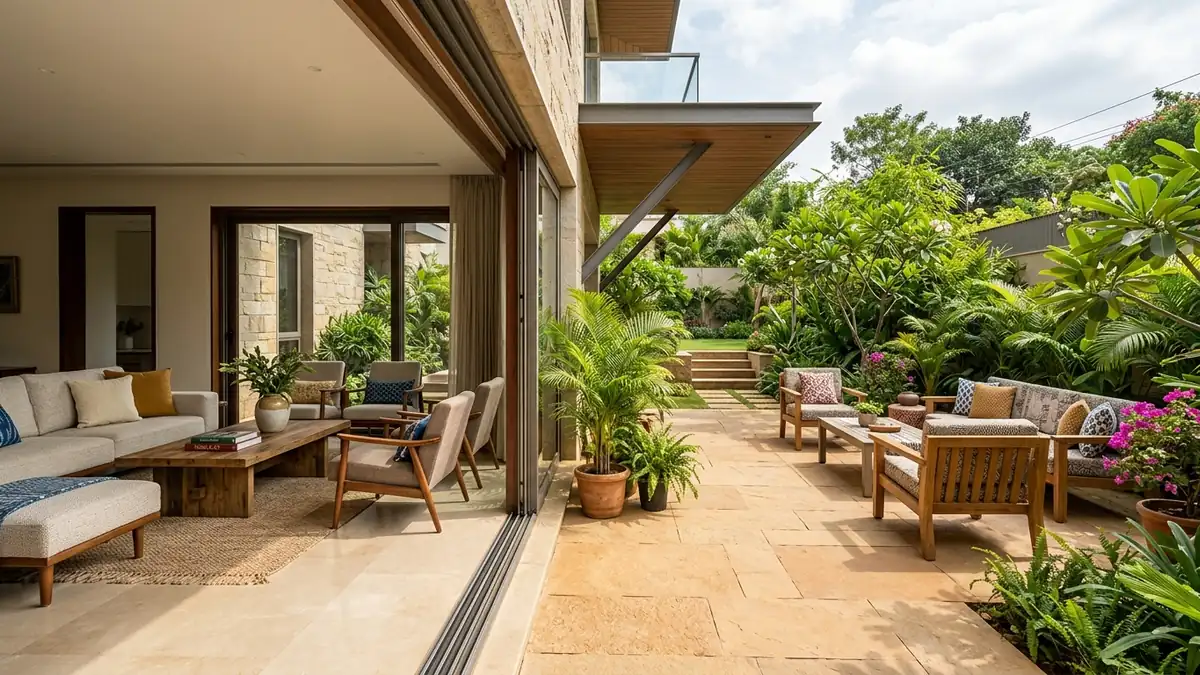
Limestone brings an understated elegance to indoor spaces. It commonly features soft shades of beige, cream, grey and pale gold. Because it is formed from mineral and marine deposits over millennia, it often contains subtle fossil patterns. It is softer than granite, allowing it to be cut cleanly into custom architectural profiles, fireplaces and decorative panels.
Interior designers appreciate limestone because its neutral palette pairs well with diverse décor styles, from minimalist contemporary to classic Indian residential designs. It stays cool underfoot, providing comfort during hot weather. To understand the broader advantages of stone floors, read our guide on the benefits of natural stone flooring for homes.
What is sandstone and why choose it?
Sandstone is a durable sedimentary rock composed of mineral quartz and sand particles. Recognized for its warm red, golden and brown tones and naturally textured slip-resistant surface, sandstone is a reliable pick for exterior patios, pathways and building facades.
Sandstone is recognized for its toughness and tactile texture. Formed in ancient riverbeds and desert environments, its quartz composition provides high structural density. Sandstone has historically been used in Indian forts and heritage structures because it handles outdoor weathering reliably.
Aesthetically, sandstone offers rich earthy colours, including terracotta reds, desert yellows and rustic browns. If you need a material for open-air garden terraces, boundary walls or exterior cladding that withstands monsoon rains and sunlight, sandstone is a practical option.
Limestone vs Sandstone: The ultimate comparison
A thorough limestone vs sandstone comparison across durability, aesthetics and porosity clarifies which is appropriate for your layout:
1. Durability and hardness
Sandstone is harder and more resistant to impact and outdoor weathering than limestone. While limestone is softer and needs protection from heavy scraping, sandstone handles harsh outdoor exposure effectively, making it ideal for exterior areas.
Dragging sharp metal furniture across polished limestone can scratch the finish, so it requires moderate care. Sandstone's quartz structure resists physical abrasion well. However, limestone's softer composition makes it easier to carve into intricate indoor moldings and lintels.
2. Aesthetic appeal and texture
Limestone provides a smooth, satin texture with neutral tones that complement formal living spaces. Sandstone presents a warmer, earthier palette with natural grain and cleft finishes suitable for outdoor garden settings.
Limestone serves as a subtle background that allows furniture and wall art to stand out. Sandstone often acts as a visual feature on its own. For clean contemporary rooms, limestone is preferred. For warm outdoor courtyards and terraces, sandstone fits naturally.
3. Porosity and water resistance
Both limestone and sandstone are porous sedimentary rocks that require sealing to prevent liquid penetration. Sandstone absorbs moisture if left unsealed in outdoor settings, which can lead to algae during the monsoons, while limestone reacts to acidic spills.
Neither stone is completely non-porous like engineered porcelain. Spilling acidic liquids like lemon juice on unsealed limestone causes etching. Outdoor sandstone in shaded garden areas can develop moss if water is allowed to pool. Professional penetrating sealers prevent both issues.
| Feature | Limestone | Sandstone |
|---|---|---|
| Texture | Smooth, refined, honed | Granular, cleft, textured |
| Colour Palette | Beige, cream, grey, soft white | Red, ochre, gold, warm brown |
| Hardness | Medium (Moderate scratch resistance) | High (Good abrasion resistance) |
| Best Use Case | Indoor flooring, interior cladding | Outdoor paving, pool decks, facades |
Best application areas for each stone
Limestone performs reliably in dry indoor spaces like living rooms, dining spaces and fireplace surrounds. Sandstone is suitable for outdoor pathways, patios, pool coping and exterior wall cladding.
- Where to use Limestone: Use it for indoor flooring in moderate-traffic areas. It works well for interior wall accents and carved fireplace mantels. Avoid using it for kitchen countertops, as calcium carbonate reacts with citrus juice and vinegar, causing surface etching.
- Where to use Sandstone: Sandstone is well suited for garden pathways, driveway borders and sandstone outdoor paving on entertainment terraces. Its natural texture provides reliable grip around swimming pools. It is also widely used for exterior wall cladding because it handles rain and sunlight without deteriorating.
Maintenance requirements
Proper maintenance requirements for natural stone include sealing both materials upon installation. Clean limestone with soft brooms and pH-neutral solutions to prevent acid etching. Sandstone in exterior settings benefits from annual washing to remove dust and seasonal organic buildup.
Avoid vinegar, bleach or harsh acid cleaners on either stone. Acid will damage the surface finish of limestone. For indoor limestone, sweep loose grit regularly and mop with water and stone-safe cleaner. For outdoor sandstone, check that the sealant is intact before monsoon season and rinse off dirt as needed.
Choose the Right Stone For Your Home
Discover our comprehensive natural stone collections at Stone World. View full-sized slabs, live mockups and receive installation guidance in Indore.
Speak With a Stone ConsultantConclusion: Making the right choice for your home
Choosing between limestone and sandstone comes down to location and function. If you are designing an indoor living room or formal dining area where smooth surfaces and neutral aesthetics are desired, limestone is the suitable option. If you are paving an outdoor garden walkway, patio or exterior elevation requiring durability and slip resistance, sandstone is the practical choice.
Matching stone properties to your climate and lifestyle ensures your investment adds lasting value and visual appeal to your home.
