
Your house looks great, but the floors are already showing their age. Scratches from the furniture, faded patches near the windows and chipped corners are getting hard to ignore. Every few years, synthetic floors force you into a frustrating cycle of repairs or complete replacements, draining your time and money.
When you build or renovate a house in India, you need materials that can actually withstand high temperatures, heavy foot traffic and the occasional spilled curry. Synthetic tiles might look appealing in a showroom, but they simply cannot compete with the natural resilience of stones quarried directly from the earth. Every day without proper flooring is another day you are settling for a foundation that compromises your home's aesthetic and structural integrity.
The solution to this endless cycle is natural stone flooring in your home. It offers unmatched durability, classic elegance and a substantial increase in your property's value. In this detailed guide, we will explore the top benefits of natural stone flooring, compare the best stone types suited for Indian climates and share practical maintenance tips. Let us see why this traditional choice remains the gold standard for luxury interiors.
Table of Contents
What is natural stone flooring?
Natural stone flooring refers to durable tiles or slabs cut directly from geological rock formations like marble, granite, limestone and slate. These materials are quarried, polished and installed in homes to create resilient, distinct surfaces that factory made alternatives cannot authentically replicate.
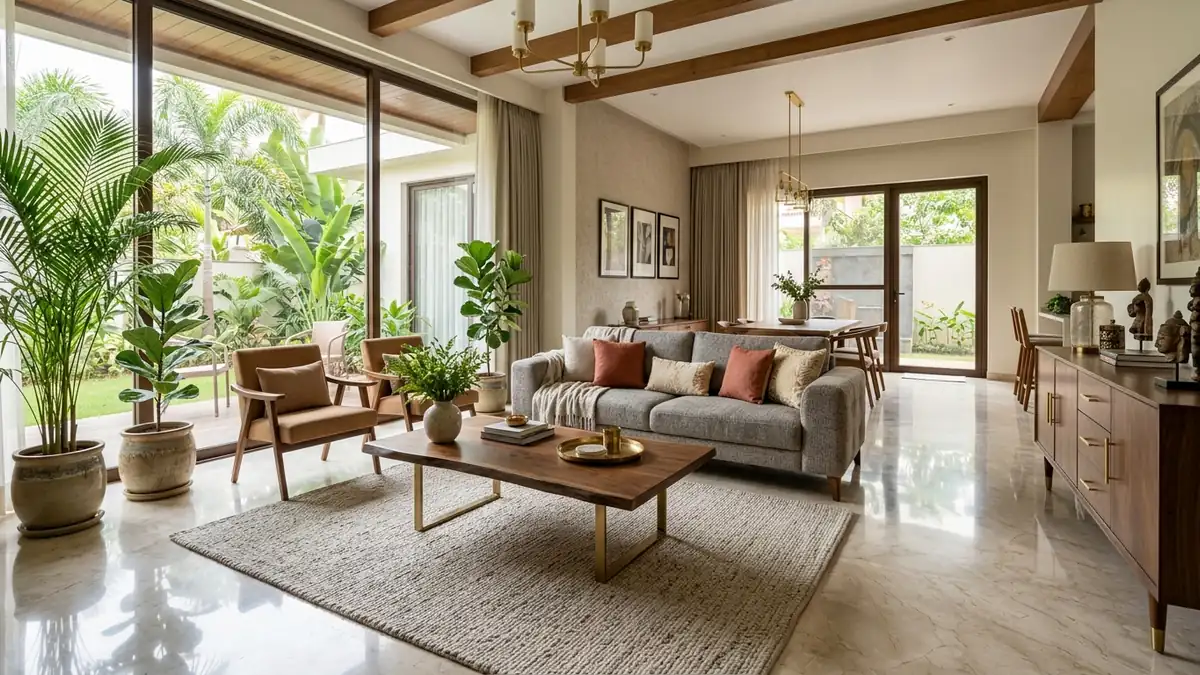
Unlike ceramic or porcelain tiles that are manufactured in factories with mass-printed patterns, every single piece of natural stone is unique. The delicate veining, bold colour variations and mineral deposits took millions of years to form under the earth's surface. When you install natural stone flooring in your home, you are bringing natural geology into your daily living space. No two houses will ever have the exact same floor.
Factory tiles often lack character. They are designed to look identical, which creates a plain, artificial environment. Natural stone brings an organic warmth and grounding texture that immediately improves the feel of a room. It connects your modern interior spaces directly with nature.
Top 5 benefits of natural stone flooring
The benefits of natural stone flooring range from high durability to eco-friendliness, making it a dependable long-term investment for residential properties. It requires simple maintenance, improves indoor air quality and significantly boosts the resale value of your home.
Homeowners often ask if the higher initial cost of stone is justified. The answer is yes. Let us break down exactly why designers and architects consistently recommend these materials for high-end residential projects across India.
1. Unmatched durability and longevity
Natural stone flooring is exceptionally durable, easily outlasting synthetic alternatives by decades. Stones like granite and slate are highly resistant to scratches, heavy impacts and daily wear, often remaining in pristine condition for 30 to 50 years with basic maintenance.
If you have children, pets or heavy solid wood furniture, you need a surface that will not easily dent or chip. This is where natural stone proves its worth. Unlike laminate that peels or ceramic that cracks under pressure, stone is built to endure. Many 40-year-old marble floors in Indian heritage homes look just as handsome today as when they were laid. They age gracefully over time.
2. Timeless aesthetic appeal
The aesthetic appeal of natural stone flooring is classic and versatile, fitting smoothly into both modern minimalist and traditional home designs. Its organic textures and rich colour variations provide a level of sophistication that elevates the entire interior space.
Trends change fast. Remember when loudly patterned ceramic tiles were in style? Today they look dated. Natural stone bypasses short-lived trends entirely. A polished granite floor or a warm limestone hallway always looks premium. Natural materials develop a soft patina over the years that adds character to your home.
3. Eco-friendly and sustainable material
Natural stone is a sustainable, eco-friendly flooring option. It is quarried directly from the earth without requiring toxic chemicals or synthetic manufacturing processes. Its long lifespan also means less frequent replacement, significantly reducing construction waste over time.
In modern construction, sustainability is essential. Factory-made tiles often require heavy energy consumption and synthetic chemical glazes. Natural stone does not release volatile organic compounds (VOCs) into your home, ensuring clean indoor air quality for your family. At the end of its life, stone can be repurposed or recycled into aggregate.
4. Low maintenance and hygienic
When properly sealed, natural stone flooring is easy to clean and hygienic. The dense surface of sealed stone prevents dust, pet dander and allergens from penetrating, making it a practical choice for families with allergy sensitivities.
Daily upkeep is straightforward. A quick sweep to remove loose dirt and a weekly mop with a pH-neutral floor cleaner is all that is required. You do not need to scrub wide grout lines constantly. Spills can be wiped away promptly without leaving permanent marks when your stone is protected with a quality sealer.
5. Boosts property resale value
Installing natural stone flooring increases a property's market value and buyer appeal. Real estate buyers recognise natural stone as a premium feature, often showing willingness to pay more for homes finished with high-grade stone floors.
Quality materials translate to better resale value. When prospective buyers compare two identical homes in Indore or Mumbai, the property featuring polished marble or granite flooring always commands a higher price. While the upfront investment is higher than basic vitrified tiles, you recover this cost through preserved equity and zero need for mid-term floor replacements.
Popular types of natural stone flooring for Indian homes
The most popular natural stone flooring types in India include marble, granite, limestone, slate and sandstone. Each stone provides distinct characteristics in terms of hardness, porosity and appearance, allowing homeowners to select materials tailored to each room's function.
India has a rich history of stone masonry. Selecting the right variety depends on where and how the floor will be used:
- Classic marble flooring: Classic marble flooring is known for its smooth finish and natural veining patterns. Because it is a softer, porous stone that requires periodic sealing, it is best suited for indoor areas like master bedrooms and formal drawing rooms. Learn more about creative layouts in our guide on modern marble floor border design ideas.
- Durable granite flooring: Durable granite flooring is among the hardest natural stones available, providing high resistance to scratches, heat and moisture. Its tough structure makes granite flooring ideal for busy kitchens, entry foyers and utility corridors.
- Warm limestone flooring: Limestone provides a pleasant, earthy look with beige and cream tones. It is a natural insulator that stays cool during summer, though it requires proper sealing to prevent staining. Read our detailed comparison on limestone vs sandstone to understand their differences.
- Textured slate flooring: Slate is naturally slip-resistant due to its cleft texture. Available in shades of grey, charcoal and green, slate works well in wet zones like bathrooms, verandas and courtyards. Discover stone options in our luxury bathroom stone collection.
- Versatile sandstone flooring: Sandstone is a weather-tough sedimentary rock recognized for its grainy texture and earthy tones. It performs reliably in open-air settings, making it a great pick for garden pathways, pool decks and balconies.
Comparing natural stone flooring options
Here is a technical summary to help you evaluate which stone type matches your project requirements:
| Stone Type | Durability Level | Best Application Area | Maintenance Need |
|---|---|---|---|
| Granite | Extremely High | Kitchens, Foyers, High Traffic | Low |
| Marble | Medium | Living Rooms, Bedrooms | Medium (Periodic sealing) |
| Slate | High | Bathrooms, Verandas, Patios | Medium |
| Limestone | Medium | Indoor dry areas, Dining | Medium (Needs sealant) |
| Sandstone | High | Outdoor paving, Balconies | Low to Medium |
Understanding natural stone finishes
The surface treatment applied to stone changes both its appearance and slip resistance. Choosing the right natural stone finishes includes polished, honed and leathered options:
- Polished finish: Produces a glossy, mirror-like surface that highlights colours and natural stone veining. Highly popular for living areas, though it can be slippery when wet.
- Honed finish: Gives a smooth, satin matte appearance without high reflection. It provides reliable traction and hides small scratches well, making it suitable for active family areas.
- Leathered finish: Adds a subtle, tactile relief that feels pleasant underfoot and conceals water spots and smudges effectively, especially on darker granites and quartzites.
Where should you install natural stone flooring?
Natural stone flooring fits into almost any room when matched correctly to the space. Hard granites perform well in active kitchens, textured slates suit wet bathrooms and polished marbles create elegant drawing rooms.
Optimal placement by room:
- Living rooms and drawing areas: Marble or polished limestone makes a welcoming architectural statement. For modern alternatives, check our article on Stonelam porcelain slabs for homes.
- Kitchens: Granite is recommended for handling hot cookware, oils and heavy movement.
- Bathrooms: Honed marble or slate provides necessary slip resistance in wet areas.
- Patios and outdoor entries: Sandstone and flamed granite withstand seasonal temperature swings without cracking.
Cost vs Value: Is natural stone flooring worth it?
While natural stone flooring requires a larger initial budget than standard ceramic tiles, its longevity makes it cost-effective over its lifecycle. It avoids replacement cycles and adds measurable equity to your residential property.
When calculating costs, look at total ownership over 20 to 30 years. Basic ceramic tiles often chip or loosen after a decade, requiring noisy demolition and new material purchases. A properly installed natural stone floor lasts for generations, saving significant money over time.
How to maintain natural stone flooring
Learning to maintain natural stone flooring requires sweeping daily, mopping weekly with warm water and a neutral cleaner and applying a penetrating sealer every two to three years. Avoid acidic solutions like vinegar or bleach to prevent surface etching.
Simple maintenance practices protect stone surfaces for decades. Grit brought in on footwear acts like sandpaper on polished stone, so daily sweeping is recommended. For mopping, use pH-neutral floor soaps. Test your floor sealant once a year by placing water droplets on the surface; if water beads up cleanly, the protective barrier is working properly.
Upgrade Your Surfaces With Timeless Stone
Discover the full natural stone collection at Stone World. Experience large-format slabs, live mockups and explore exclusive natural gemstones for your luxury interior project.
Speak With a Stone Consultant